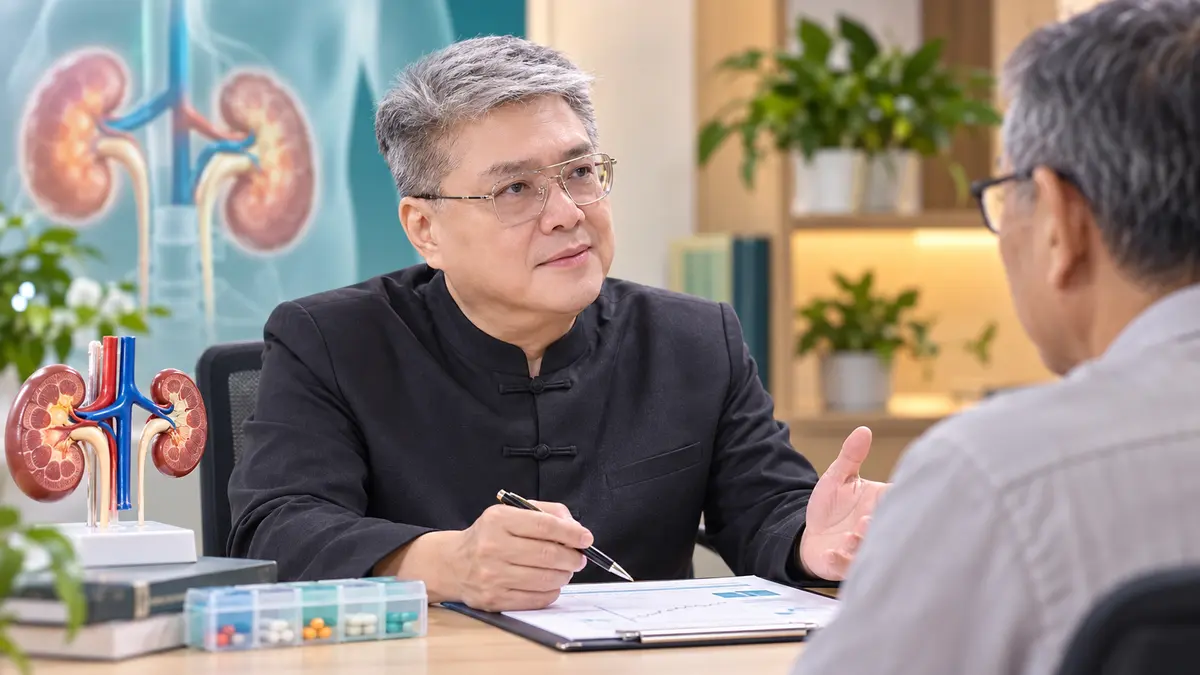
A kidney transplant does not usually involve removing the original kidneys and replacing one with a “new” kidney. The donated kidney is commonly placed in the lower abdomen and connected to the blood vessels and bladder, while the original kidneys remain in place. A successful transplant can free many patients from dialysis and substantially improve daily life, diet and ability to work.
However, the transplanted kidney may be affected by rejection, infection, recurrence of the original disease, poorly controlled blood pressure or diabetes, and medication side effects. Graft survival varies greatly; there is no fixed rule that a transplanted kidney lasts only five or six years. Anti-rejection medicines and regular blood tests and follow-up are essential. Reducing or stopping these medicines without approval can cause severe rejection and graft loss.
After transplantation, TCM should be considered only as cautious supportive care for concerns such as appetite, sleep, fatigue or digestive discomfort. It cannot replace anti-rejection medicines or transplant follow-up. Some herbs and supplements may harm the liver or kidneys, alter medicine levels or interact with immunosuppressants, so the transplant team must approve them before use. Fever, reduced urine output, pain over the transplant, marked swelling, vomiting or inability to take medicines requires prompt contact with the transplant centre.
Long-term graft protection also includes managing blood pressure and glucose, preventing infection, following vaccination advice and checking interactions before starting new medicines. Anti-rejection drug levels must remain stable, so diarrhoea, missed doses and new supplements should be reported promptly to the transplant team.